How to Love Yourself? 7 Steps to Self-Love
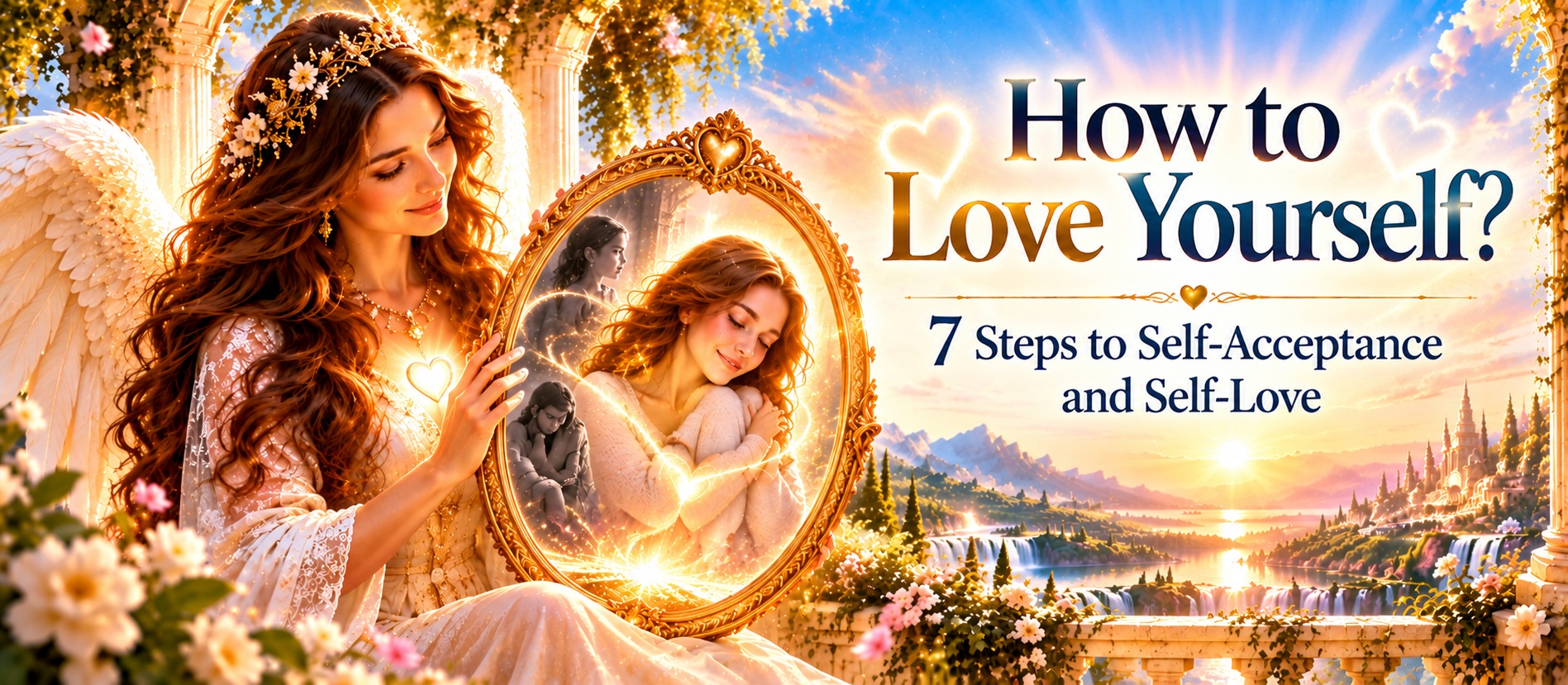
How to Love Yourself?
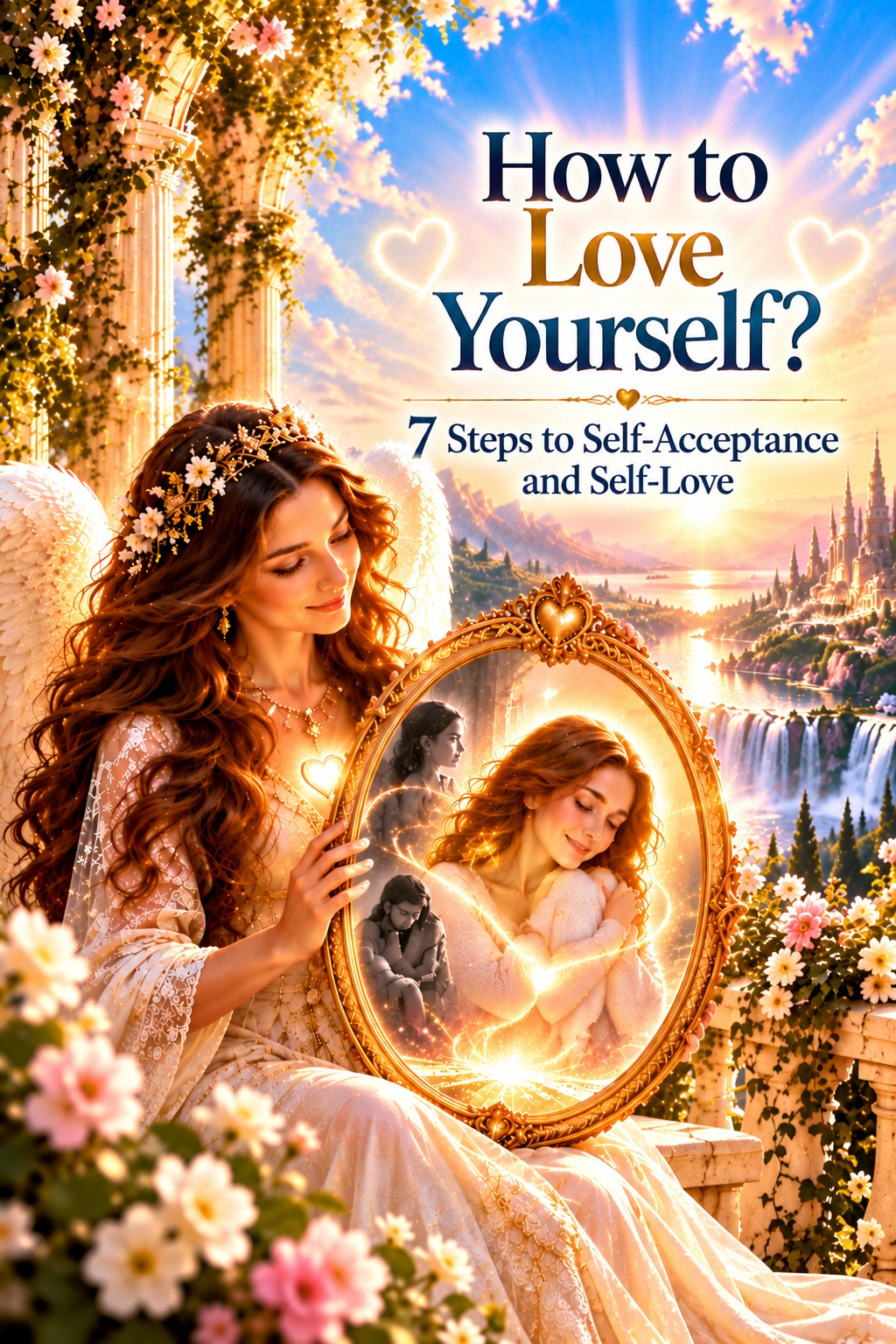
7 Steps to Self-Acceptance and Self-Love
How can you love yourself if, for years, you have learned mainly to judge, compare, and correct yourself? How can you find self-love when you know your own weaknesses, the mistakes you have made, and the stories you would rather forget?
We often believe that we must first become someone better. Calmer. Stronger. More beautiful. Wiser. Only then — perhaps — will we deserve love.
But what if it is the other way around?
What if love is not a reward for perfection, but the space in which we can grow?
From the perspective of 5D Vibration, self-love is not about convincing the mind that we are perfect. It is a process of gradually opening and activating the heart — developing inner kindness, awareness, and a willingness to treat ourselves with the same respect we would want to offer another person.
It is the beginning of the journey from I WANT — "I want to be loved" — to I LOVE — "I am learning to become a source of love."
What Does Self-Love Really Mean?
Self-love is a kind and conscious relationship with yourself. It means recognizing your own worth, caring for your needs, respecting your boundaries, and being willing to grow without constantly rejecting yourself.
It does not mean that you are always satisfied with yourself. Nor does it mean that every decision you make is right.
You can love yourself and still admit: "I made a mistake. I want to make it right."
You can accept your emotions while learning not to hurt others because of them.
You can recognize your limitations without believing that they make you less worthy.
Self-acceptance does not mean giving up on growth. It means that we stop growing against ourselves and begin growing out of love for ourselves.

Why Is It So Difficult to Love Yourself?
Our self-image does not develop in a vacuum. It is shaped by experiences, relationships, the expectations of others, comparisons, and the words we have heard over the years.
If we were often criticized, we may have learned that love must be earned. If our emotions were rejected, we may have begun hiding them even from ourselves.
Over time, the voice of external judgment can become our own inner dialogue:
"I am not good enough."
"I should be further along by now."
"I cannot make mistakes."
"First, I must achieve something to deserve love."
Such thoughts may feel true simply because we have repeated them for a long time.
So the first step is not forcing yourself to feel love immediately.
The first step is noticing how you relate to yourself.
Self-Love vs. Selfishness — What Is the Difference?
Some people worry that loving themselves will make them selfish.
Yet healthy self-love does not require placing yourself above others. It is not about believing: "I am more important than everyone else."
Its message is much simpler:
"I matter too. My needs and boundaries matter, just as the needs and boundaries of others do."
Self-love does not have to separate us from the world. It can help us build more honest, peaceful, and respectful relationships.
When we no longer have to constantly prove our worth, it becomes easier to recognize the worth of others.
From a 5D perspective, love is not a competition over who deserves it more. It is a value we can develop and share.
How to Love Yourself? 7 Simple Steps
Self-love does not have to appear suddenly. It can grow slowly — through small choices repeated every day.
Here are seven practices that can help you begin this journey.
1. Pause and Notice How You Treat Yourself
For most of the day, our attention is directed outward: responsibilities, information, expectations, and the needs of others.
Try pausing this constant flow for a moment.
Sit comfortably, take a few calm breaths, and ask yourself:
How do I speak to myself when I make a mistake?
Do I allow myself to rest?
Do I notice my own needs?
Do I treat myself like a friend or an opponent?
Do not judge the answers. Simply notice them.
Awareness opens a space in which we can begin to choose differently.
2. Change Your Inner Dialogue from Judgment to Kindness
The inner critic often uses language you would never use toward someone you love.
Instead of:
"I ruined everything again."
Try:
"This did not turn out the way I wanted. I can understand what happened and try again."
Instead of:
"I am hopeless."
Try:
"I am going through a difficult moment. I do not need to hurt myself further with my own words."
This is not about pretending that everything is fine. It is about speaking to yourself truthfully, but without cruelty.
Kindness toward yourself does not take away responsibility. It gives you more space to accept it consciously.
3. Stop Rejecting Your Difficult Emotions
Every person experiences fear, sadness, anger, jealousy, or helplessness.
When a difficult emotion appears, it is easy to think: "I should not feel this way."
Yet emotions are not proof that something is wrong with us. They can provide information about our needs, boundaries, and experiences.
Instead of fighting the very fact that they exist, try saying:
"I notice that I feel angry."
"I notice that I feel sad."
"I do not have to condemn myself for this."
"I can decide what to do with this feeling."
Accepting emotions does not mean approving every behavior that might result from them.
We can feel anger and choose conversation instead of violence. We can feel fear and still take a small, safe step forward.
In this way, we begin transforming automatic reactions into conscious choices.
4. Look at Your Past and Your Shadow with Love
Each of us carries a history of experiences that have influenced who we are.
Some memories bring joy. Others may be connected to shame, regret, guilt, or rejection.
In approaches inspired by Jungian psychology, people speak of the shadow — those aspects of personality that we do not want or are unable to recognize and accept within ourselves.
The shadow may include difficult emotions and behaviors, but also hidden talents, sensitivity, or strength we were afraid to reveal.
We do not have to cut off parts of ourselves to become more conscious.
We can gradually learn to understand our own history, recognize old defense mechanisms, and develop new ways of responding.
Try looking at your past self not as someone who must be judged, but as a person who acted with the understanding and possibilities available to them at that moment.
You can ask:
"What did I need back then?"
"What was I not yet able to understand?"
"What can I learn from that experience?"
"How can I act differently today?"
This does not mean justifying harm or forcing yourself to forgive anyone.
It means being willing to stop treating your own history as an enemy.
Not everything hidden in the shadow is darkness. Sometimes it is light we have not allowed to shine.
If memories feel overwhelming, especially when they involve trauma, it is worth exploring them with the support of a qualified professional. Self-love also includes knowing when to ask for help.
5. Bring Your Attention into the Space of Your Heart
At 5D Vibration, the heart is a symbol of our capacity for love, compassion, and deep connection with life.
We understand opening the heart as gradually developing this capacity — not as a one-time magical event.
You can begin with a simple practice.
Sit comfortably. If you wish, place your hand in the center of your chest. Breathe naturally.
For a moment, direct your attention toward the space of your heart.
You do not have to create any extraordinary sensations. Calm presence is enough.
Then remember a small moment of kindness: someone's smile, a helping hand, closeness with someone you love, caring for an animal, or the beauty of nature.
Allow yourself to stay with that memory for a moment.
You can say silently:
"I open myself to kindness."
"I am learning to treat myself with love."
"I can develop love in my heart."
"I can express it in everyday life."
If you do not feel anything special, it does not mean you have failed.
Self-love is not a test of whether you can feel certain emotions.
It is a practice of returning to kindness, even when doing so feels difficult.
6. Turn Self-Love into Concrete Actions
We can speak beautiful words about love while constantly ignoring our own needs.
That is why self-love also needs a practical dimension.
Sometimes it means:
Rest —
when the body and mind need recovery.
Boundaries —
when something violates our sense of safety
or dignity.
Honesty —
when we need to admit a mistake
and repair its consequences.
Care —
when we need support, a conversation,
or professional help.
Courage —
when we want to take a step toward a life
more aligned with our values.
Ask yourself:
"If I truly treated myself with love today, what would I do differently?"
You do not have to change your entire life at once. Choose one small gesture.
Love becomes real when it begins to influence our choices.
7. Share Love Without Losing Yourself
Inner love does not have to end with our personal experience.
As we develop kindness toward ourselves, we can gradually bring it into our relationships with others.
Through attentive listening. An honest word. Help. Patience. Creativity. Respect for life.
But sharing love does not mean giving up our own boundaries or taking responsibility for everyone else's emotions and decisions.
Love that includes others should not exclude ourselves.
This is where personal practice begins to become something greater: love expressed in the world.
An Open Heart — From Feeling Love to Becoming Its Source
Many people think of love primarily as something we receive.
We want someone to love us, accept us, understand us, and appreciate us. These are natural human needs.
Yet the 5D Vibration perspective also invites us to ask a different question:
"What if I can gradually develop within myself the love I long to experience?"
In this sense, an activated heart is a heart that not only longs for love but increasingly expresses it.
This process begins with awareness. We direct our attention to the space of the heart, learn to recognize kindness, develop compassion toward ourselves, and consciously bring this attitude into our thoughts, words, and actions.
The more often we practice such choices, the more naturally they may become part of our lives.
The goal is not to never experience fear, anger, or sadness. It is to become increasingly able to return to love.
This is what we call the journey toward I LOVE.
I WANT → I LOVE — The Most Important Transformation
I WANT means:
"I want someone to give me love."
"I want to finally feel good enough."
"I want to achieve something that proves my worth."
Desires themselves are not wrong. The need for closeness, acceptance, and safety is part of the human experience.
The problem arises when we make our entire sense of self-worth dependent on what we receive from outside.
I LOVE means changing direction:
"I am learning to develop love within myself."
"I can treat myself with kindness right now."
"I can create and act from love
instead of constantly trying to earn it."
We do not stop needing other people. We do not become emotionally self-sufficient.
But we begin building a relationship with ourselves that is not based entirely on external validation.
We stop postponing love until the day we become perfect.
Can You Learn to Love Yourself If You Do Not Feel It Today?
Yes — you can begin this journey without a strong feeling of self-love.
Sometimes the first step is not even self-acceptance, but simply being willing to stop constantly attacking yourself.
If the sentence "I love myself" feels untrue to you today, you do not have to repeat it by force.
You can begin with something simpler:
"I want to learn to be gentler with myself."
"I can take one kind step today."
"I do not have to earn basic respect."
"I am willing to gradually build a better relationship with myself."
That is enough for a beginning.
You do not have to love yourself fully today to begin treating yourself with love.
A Short Self-Love Meditation — 5 Minutes
This simple practice can accompany you in the morning, in the evening, or whenever you need to reconnect with yourself.
Minute 1 — Pause
Sit comfortably. Feel your body's contact with the surface beneath you. Allow your breath to flow naturally.
Minute 2 — Bring Your Attention to Your Heart
Direct your attention to the center of your chest. If it feels comfortable, place your hand there.
Minute 3 — Remember Kindness
Recall a small act of care that you once received or offered. Do not try to force anything.
Minute 4 — Offer Kindness to Yourself
Say silently:
"May I learn to live at peace with myself."
"May I treat myself with kindness."
"May I have the courage to grow in love."
Minute 5 — Choose One Action
Ask:
"How can I express this love today through one concrete action?"
It might be rest, a calm conversation, setting a boundary, forgiving yourself for a small mistake, or showing someone kindness.
Meditation does not end when you open your eyes. Its meaning can continue to unfold in the way you live your day.
5D Vibration — Become Love
At 5D Vibration, we believe that knowledge and awareness gain deeper meaning when they lead to greater love toward ourselves, other people, and all life.
We can gain experiences, develop skills, achieve goals, and discover new ideas.
But it is worth asking from time to time:
"Does all of this help me become a more conscious and loving person?"
We do not have to cut off our past. We do not have to pretend we have no shadow. We do not have to achieve perfection to begin transforming.
We can slowly bring our attention into the space of the heart, deepen our inner kindness, and express it more fully through our thoughts, words, and actions.
An open heart is an activated heart — a heart that gradually becomes a source of love in everyday life.
This is what our articles, music, mantras, and meditations are here for. They are a gift and an invitation to personally experience this journey.
Not to tell you who you must become.
But to remind you that you can consciously develop what is most beautiful within you.
I WANT → I LOVE → I CREATE → I SHARE → WE ARE
Feel Love.
Become Love — in Action.
The Light within me awakens the Light within you.
Jimi Roots Studio